Sunday, February 24, 2008

012 HTC Advantage x7501

The HTC Advantage x7501 is a Windows Mobile 6 device, with Wi-Fi, Bluetooth, 3G, 3 MP camera, and GPS. The 5" screen is bright and readable, and the magnetically-attaching keyboard is quite compact. It has 128 MB of RAM and a slot for 2-GB or 4-GB SD card. Street price is $849 - $899.

CNET.com's Review of the HTC Advantage x7501


HTC recently announced an a upgrade to the Advantage, the 7510, which will have 16 GB of flash memory and a slimmer magnetic keyboard. Available March 2008 in Europe, but not in the USA. Sample Review

011 Asus EEE PC

The Asus EEE PC is an inexpensive ($400), compact (7" screen), lightweight PC with 4-GB flash memory. It comes loaded with 40 applications for internet surfing, office productivity, multimedia (audio and video editing) and games. A 0.3 Megapixel camera is also built in.

CLICK HERE FOR C-Net's REVIEW OF ASUS EEE PC


010 AT&T Tilt


The AT&T Tilt may be the most full-featured smart-phone currently available in the U.S.A. Includes Microsoft Windows® Mobile 6 Professional, Wi-Fi, and 3G fast wireless broadband connectivity, built-in GPS, and 3 MP camera.
Available from AT&T Wireless for $299.99 with a two-year contract.


PC Magazine Review of AT&T Tilt


C-NET's REVIEW OF AT&T TILT


009 Classmate PCs


Intel's alternative to the "One Laptop Per Child" project is the Classmate PC. Intel's mission is ".. to improve education and provide economic opportunities..." to children in emerging nations.

See also: http://en.wikipedia.org/wiki/Classmate_PC


VIDEO OF CLASSMATE PC IN NIGERIA


C-NET Review of Classmate PC

008 One Laptop Per Child

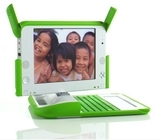
The "One Laptop Per Child" project is a non-profit organization that aims to equip children in developing countries with an XO Laptop. The laptop is not available in the U.S.A. or other developed countries.


See also:
http://en.wikipedia.org/wiki/$100_laptop


Video Link: OLPC-on-60-Minutes

007 Microsoft Ultra-Mobile PC


Ultra-Mobile PCs that run Microsoft's Mobile 6 and Vista weigh less than 2 pounds and have screen sizes 4" to 7". Most newer versions include applications such as:

  • Microsoft Office Mobile
  • Microsoft Office Outlook Mobile
  • Internet Explorer Mobile
  • Live Search for Windows Mobile
  • Windows Live for Windows Mobile
  • Windows Media Player Mobile


See: http://www.microsoft.com/windows/products/winfamily/umpc/default.mspx and http://www.microsoft.com/windowsmobile/default.mspx


006 iPods in the Classroom

Portable media players (including music players, video players, and iPods) have numerous classroom applications, even though they do not have all the computing and telecommunications capabilities of smartphones.


The Learninginhand Project
has assembled various applications and resources for using ipods for teaching and learning which are demonstrated here on their website.


This Video ipods in the Classroom Project shows examples of using video podcasts for teaching and learning.


005 Learning 2 Go


This website
describes a project in which students at an elementary school used handheld computers. Each student was assigned their own handheld device. Teachers developed and conducted in-class and out-of-class lessons via the handheld devices. Students conducted interviews, wrote assignments, and produced video on the handheld devices.

The extensive resources necessary to support this project is emphasized. In addition to funding the purchase of a handheld unit for every student, teachers needed training, as well as ongoing technical support. Software authors and producers partnered with the school and the teachers to develop instructional materials. Additional curriculum specialists were also enlisted to develop lessons and instructional applications that teachers and students used on the handhelds.

004 University of Cincinnati


Students, faculty, and administrators at the University of Cincinnati are using smartphones for campus communications and for teaching and learning in the Blackboard Platform. CLICK HERE to view a description of this project.

003 Mobile Phones: Constructively, Not Deconstructively

What does it mean to use mobile phones in the classroom "constructively." This slideshow presentation defines the distinction between "constructive" and "deconstructive" uses of smart-phones in elementary or secondary school classroom.

002 Using Mobile Phones in the Classroom

This is a TeacherTV documentary video describing the pros and cons of using smartphones in education at various grade levels. It observes the numerous organizational obstacles and pedagogical issues that need to be addressed.

001 OVERVIEW: Ultramobile Computing for Research, Teaching, Learning

Today, many technologies are converging and becoming integrated into a single handheld device: The “smart phone”, PDA or portable media player is now multi-functional: It may also be a camera, camcorder, phone, Internet browser, GPS device, video player, and even an office-productivity computer.

For educational purposes, mobile computing means one’s learning tools are no longer confined to the classroom or even to the desk. It literally means that one has access to technology-based learning tools and resources anywhere and anytime. For example, the audio player function on mobile devices means that one can reviewing course materials while doing other activities away from one’s desk: e.g. in a doctor’s waiting room, while exercising, commuting or doing laundry.

Powerpoint presentations, video documentaries and other graphic-based information may also be accessed on-demand as needed on the mobile device, not just when the presentations are delivered in the classroom or broadcast on television.

For field-based study and research, including international study trip, the student can use their mobile device as a camcorder to record their observations or as a digital still camera to photograph and document their experiences. The student’s videos, photos and note-taking can be coordinated with articles and blogs accessed though the web, and with the GPS based maps and data on the device.